




Oligopeptide-1 (CAS 72957-37-0) Supplier | EGF Cosmetic Peptide API
Oligopeptide-1 powder, CAS 72957-37-0, EGF cosmetic peptide, Epidermal Growth Factor API, recombinant peptide supplier, cosmetic CDMO raw material, peptide inclusion bodies, low endotoxin peptide
Content
⚠️ B2B Compliance & Identity Notice
Shaanxi Sunrise (Pharma-Sunrise) operates strictly as an upstream B2B chemical manufacturer and botanical extraction facility. The materials discussed herein, including Oligopeptide-1 Powder (CAS 72957-37-0), are raw cosmetic and pharmaceutical ingredients designed exclusively for qualified R&D laboratories, CDMOs, and industrial formulation engineers. We do not manufacture, package, or distribute finished retail skin-care serums or dosage forms. Not for direct human consumption. No C-end retail inquiries will be entertained.
Marketing Hype vs. Thermodynamic Reality
The global cosmetic and dermatological pipeline is absolutely obsessed with Epidermal Growth Factor (EGF), officially designated in the INCI directory as Oligopeptide-1 (CAS 72957-37-0). Known within the high-end Asian supply chain as Guatai-1, this 53-amino acid polypeptide is celebrated for its unparalleled ability to stimulate keratinocyte proliferation, accelerate post-surgical wound healing, and aggressively remodel dermal matrices. But step away from the marketing brochures and into the heavy bioreactor compounding laboratory. The reality is brutal. Synthesizing and formulating this molecule into a stable, commercially viable product is a thermodynamic nightmare.
Most commercial buyers operate under a fatal assumption: that a high HPLC purity score automatically equates to high biological efficacy. It absolutely does not. The global market is currently flooded with cheap, generic Oligopeptide-1 powders sourced from substandard fermentation processes. What they are shipping to unsuspecting formulation engineers is often a denatured, biologically dead protein aggregate. For a lead CDMO formulator or a procurement auditor, utilizing these "dead" peptide APIs isn't just a waste of capital. It leads to catastrophic product recalls, destroyed brand equity, and complete failure in clinical efficacy trials.

The 53-Residue Minefield: Why Commercial Peptides Fail
Oligopeptide-1 is not a simple, linear short-chain peptide. It is a highly complex, folded macromolecule containing exactly 53 amino acids. Its entire biological function—its ability to physically dock to the EGFR (Epidermal Growth Factor Receptor)—is entirely dependent on its three-dimensional conformation. If the geometry is off by a fraction of an angstrom, it fails.
1. Inclusion Bodies and Disulfide Scrambling
To achieve commercial scale, Oligopeptide-1 is expressed using recombinant Escherichia coli (E. coli). During high-density fermentation, the EGF peptides rapidly aggregate into dense, insoluble intracellular clumps known as inclusion bodies (IBs). The structural integrity of active Oligopeptide-1 relies on three highly specific intramolecular disulfide bonds. During the refolding step, if the redox buffer is not perfectly calibrated, these six cysteine residues "scramble"—forming incorrect pairings. A scrambled peptide will yield the exact same molecular weight on a mass spectrometer, but it is biologically inert.
2. The Endotoxin (LPS) Hazard in Wound Healing
Because Oligopeptide-1 is extracted from the lysate of Gram-negative bacteria, the crude broth is heavily contaminated with Lipopolysaccharides (LPS), commonly known as endotoxins. Many low-tier suppliers skip the brutally expensive chromatography steps required to strip out LPS. If you apply a peptide laden with bacterial endotoxins to a compromised epidermal barrier, it triggers a massive pro-inflammatory cytokine cascade, inducing severe contact dermatitis.
3. High Molecular Weight (HMW) Aggregates and Hydrolysis
Misfolded Oligopeptide-1 aggregates, forming dimers, trimers, and High Molecular Weight (HMW) oligomers. These aggregates are highly immunogenic. Furthermore, in aqueous environments, the peptide backbone undergoes rapid hydrolysis. You formulate it. You ship it. Two months later on a retail shelf, the bioactivity is literally zero.
The Shaanxi Sunrise Architecture: Forging the Active Baseline
At Shaanxi Sunrise (Pharma-Sunrise), we rely on brutally rigorous, data-driven biotechnology and downstream processing. We utilize highly calibrated recombinant expression systems followed by a proprietary, multi-stage refolding matrix. After solubilizing the inclusion bodies, we carefully dialyze the chaotropic agents while utilizing a strictly controlled Glutathione redox system. This forces the 53-amino acid chain to adopt its native, highly active tertiary structure.
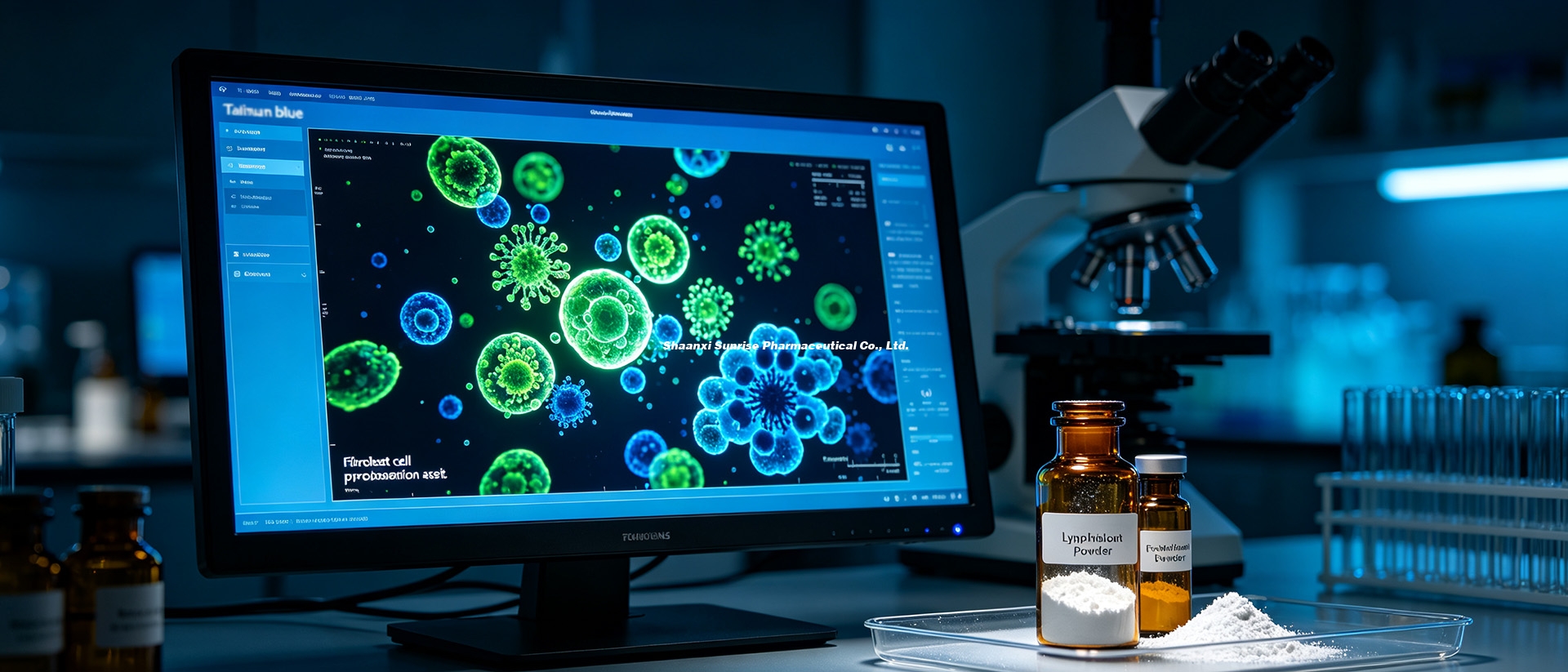
But we don't just assume it worked. We mathematically prove it. Every single batch is subjected to a rigorous in vitro cell proliferation assay (using NIH/3T3 murine fibroblasts). If the specific activity does not exceed 1.0 × 10⁶ IU/mg, the batch is immediately destroyed.
Auditor's Metric: Generic Market Standard vs. Sunrise Parameters
The generic cosmetic market grade settles for 95% purity and relies solely on basic UV-HPLC data. That leaves a massive, dangerous margin for scrambled isomers, HMW aggregates, and inflammatory endotoxins. Below is the unvarnished analytical data comparison that dictates our uncompromising internal release criteria.
| Analytical Parameter | Generic Market Standard | Sunrise Internal Standard |
|---|---|---|
| HPLC Purity (Area %) | ≥ 95.0% | ≥ 99.0% (Strictly Enforced) |
| Biological Activity (NIH/3T3) | Not Tested / Theoretical Claim | ≥ 1.0 × 10⁶ IU/mg (Verified in vitro) |
| Endotoxin Level (LAL Assay) | < 10.0 EU/mg | < 1.0 EU/mg (Dermatology Grade) |
| HMW Aggregates (SEC-HPLC) | Rarely Tested (>5% common) | ≤ 0.5% (Monomer confirmation) |
The Final Mile: Glass Transition (Tg') and Lyophilization Matrix
Even if the recombinant protein is perfectly folded and purified, shipping naked Oligopeptide-1 at ambient temperature will destroy it via thermal denaturation. Drying it improperly is equally fatal.
At Shaanxi Sunrise, we protect the tertiary structure using advanced thermodynamic excipient engineering. Prior to lyophilization, the peptide is suspended in a specialized matrix—typically utilizing high-grade Trehalose. Because Trehalose possesses an exceptionally high glass transition temperature (Tg'), it acts as a robust molecular scaffold. During secondary desorption, the Trehalose matrix physically locks the Oligopeptide-1 into its active conformation. The result is a highly porous, instantaneously soluble amorphous cake that guarantees absolute, verifiable stability from our bioreactor to your formulation vessel.
Formulation & QA Auditor FAQ (Deep Dive)
Q1: How do you mathematically prove the biological activity of your Oligopeptide-1?
We do not rely on theoretical mass mapping or simple UV absorbance. We execute the MTT cell proliferation assay using standard NIH/3T3 murine fibroblast cell lines. By measuring the dose-dependent response, we generate a precise EC50 value. This mathematically translates into our guaranteed specification of ≥ 1.0 × 10⁶ IU/mg. If it doesn't trigger receptor docking in vitro, we do not ship it.
Q2: My previous supplier's EGF lost activity in my water-based serum. How do I fix this?
Naked Oligopeptide-1 is inherently unstable in water due to protease susceptibility and natural hydrolysis. For aqueous liquid serums, you must formulate at a strict pH of 5.5 to 6.5 and utilize stabilizing agents (like human serum albumin, hyaluronic acid, or specifically engineered cyclodextrins). Alternatively, we highly recommend liposomal encapsulation (nano-emulsions).
Q3: Is your Oligopeptide-1 manufactured via SPPS (chemical synthesis) or Recombinant technology?
Our high-activity, 53-amino acid Oligopeptide-1 is produced exclusively via advanced recombinant DNA technology in microbial hosts. Successfully forcing three specific disulfide bonds to form correctly in a 53-mer synthetic chain yields abysmal active recovery. Recombinant expression, followed by our proprietary redox-refolding protocol, is the only industrially scalable method.
Q4: What is the exact endotoxin limit, and why does it matter so critically for cosmetics?
Our internal standard enforces Endotoxins at < 1.0 EU/mg (tested via LAL assay). In the high-end cosmetic sector, Oligopeptide-1 is frequently applied post-microneedling or on compromised skin barriers. If LPS (endotoxins) are present, they trigger massive pro-inflammatory cytokine release via immune TLR4 receptors, causing severe erythema. Low endotoxin is a non-negotiable safety parameter.
Stop Buying "Dead" Peptides. Demand the Bioactivity Data.
Shaanxi Sunrise provides verifiable, high-activity Oligopeptide-1 (CAS 72957-37-0) engineered for the most rigorous global dermatological CDMOs. Demand the MTT cell assay data. We have it ready.
REQUEST FULL COA, BIOACTIVITY ASSAY & B2B QUOTE*Strictly for B2B procurement, qualified researchers, and industrial compounding entities.