




In the past three years, global demand for GLP-1 receptor agonist peptide APIs has maintained a compound annual growth rate over 20%, driven by the rising prevalence of type 2 diabetes, metabolic syndrome and obesity worldwide. Among all long-acting GLP-1 analogs, Liraglutide (CAS No. 204656-20-2) remains the most mature, widely validated synthetic peptide raw material for preclinical trials, biosimilar formulation development and laboratory calibration.
Many procurement managers, CRO researchers and generic pharmaceutical manufacturers face consistent confusion: How to distinguish qualified pharmaceutical-grade liraglutide API from low-purity industrial peptide powder? What core technical indicators must be verified before bulk order placement? This article systematically sorts out molecular characteristics, synthetic production technology, release specifications, and global cold chain supply standards of liraglutide lyophilized powder, providing standardized reference for all industrial B2B purchasers.
What Molecular Modifications Make Liraglutide API Distinct?
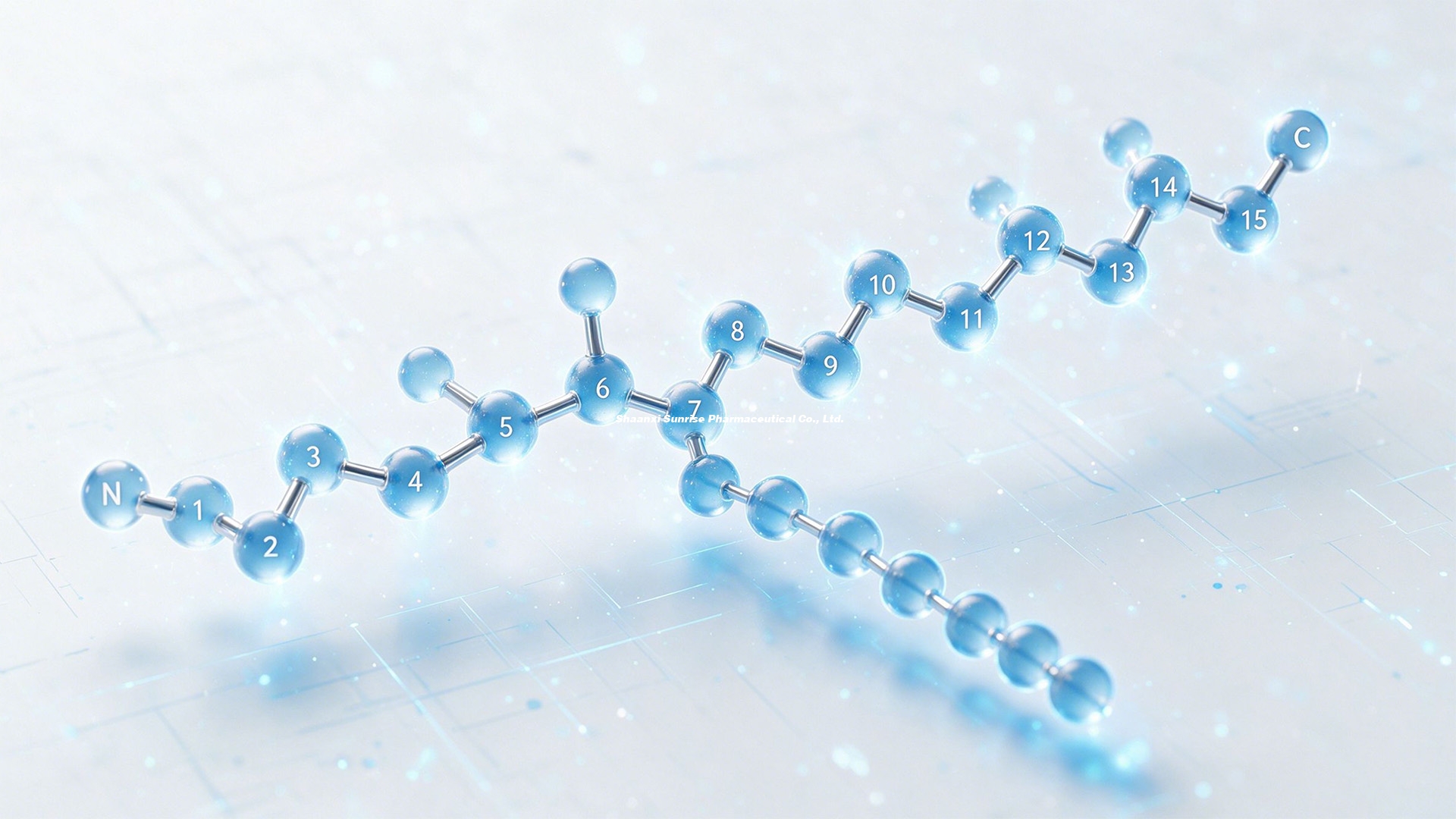
Native endogenous GLP-1 secreted by human intestinal L-cells has an extremely short systemic half-life, degraded completely by DPP-4 enzyme within 2-3 minutes after entering blood circulation, which cannot support once-daily subcutaneous administration schemes. Liraglutide, a synthetic acylated linear polypeptide with 31 amino acid residues, reaches 97% sequence homology with human GLP-1 through two precise molecular engineering optimizations, forming the core structural foundation of its long-acting characteristics.
Lys34 Substitution: The Lys34 site of native GLP-1 is replaced with an arginine residue, eliminating the potential cleavage site of DPP-4 protease at the C-terminal segment without interfering with receptor binding affinity.
C16 Palmitoyl Addition: A C16 palmitoyl fatty acid side chain is connected to the Lys26 position via a glutamic acid spacer group. This creates a natural molecular barrier to block DPP-4 enzyme contact, extending liraglutide’s in-vivo half-life to approximately 13 hours.
Advanced SPPS Orthogonal Chromatography Production
For pharmaceutical-grade API that meets ICH impurity control standards, orthogonal multi-stage SPPS coupled with preparative RP-HPLC purification has become the mainstream industrial choice. Unlike microbial fermentation which leaves complex host cell protein residues requiring repeated decontamination, our optimized SPPS production line builds independent reaction loops for each amino acid coupling step.
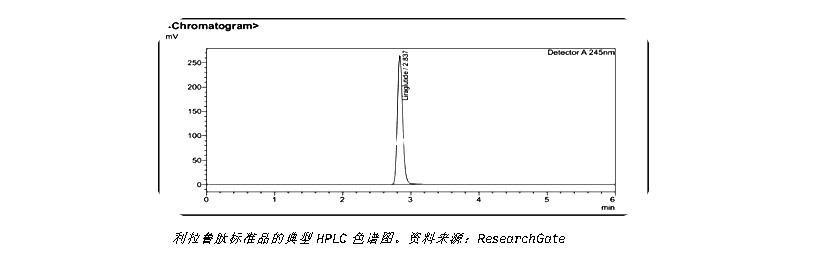
Our standardized SPPS production workflow includes six core control nodes to ensure factory release purity reaches ≥99.58% via RP-HPLC detection, far exceeding the minimum pharmacopoeia limit of ≥99.0%. Multi-gradient reversed-phase liquid chromatography is applied for staged desalination and impurity separation, effectively removing truncated peptides, stereoisomers and residual TFA volatile solvents.
Critical Quality Control Indicators for Batch Release
All injectable peptide APIs belong to high-risk pharmaceutical raw materials. Incomplete quality testing can lead to formulation precipitation or increased immunogenic risk. According to ICH Q7A and USP standards, we execute mandatory release testing with the following stable batch detection data:
| Analytical Specification | Pharmacopoeia Limit | Typical Release Result | Validated Methodology |
|---|---|---|---|
| Assay Purity (Area) | ≥ 99.0% | ≥ 99.58% | Reversed-Phase HPLC |
| Bacterial Endotoxins | ≤ 0.50 EU/mg | ≤ 0.18 EU/mg | Kinetic LAL Gel Clot |
| Residual TFA Content | ≤ 1.0% | 0.45% | Ion Chromatography / GC |
| Single Maximum Impurity | ≤ 0.50% | 0.19% | HPLC Area Normalization |
| Specific Optical Rotation | -45.0° to -55.0° | -49.2° | Polarimetry Method |
| Water Content (KF) | ≤ 5.0% | 2.8% | Titrimetric Volumetric |
Storage & Cold Chain Shipping Standards
Liraglutide acylated polypeptide sequence is extremely sensitive to moisture, high temperature and ultraviolet light. The finished lyophilized powder must be sealed in double-layer vacuum aluminum foil bags or sterile glass vials, stored in an aseptic frozen environment at -20°C ±5°C. Under compliant cold chain transportation and warehouse storage conditions, the product maintains full structural stability for 24 months.
For cross-border international delivery, we adopt validated full cold-chain logistics solutions packed in insulated isothermal containers filled with dry ice and phase-change cooling packs, meeting diversified demand from small laboratory research to large-scale mass compounding orders.
Frequently Asked Questions (FAQs)
What is the minimum order quantity (MOQ) for your Liraglutide API?
As a direct manufacturer, we offer highly flexible MOQs. For early-stage laboratory research, we supply mg-level sterile vials. For pilot scale-up and commercial manufacturing, we can steadily supply kg-level vacuum-sealed batches.
Can you customize the peptide content for specific formulation needs?
Yes. Thanks to our independent SPPS synthesis workshop, we can adjust and strictly control the peptide content (e.g., customizing to ≥85.0%) to perfectly align with your specific downstream formulation processes.
What technical documentation is provided with each batch?
Every shipment is accompanied by a comprehensive technical data package, including the batch-specific Certificate of Analysis (COA), HRMS mass spectrum, HPLC chromatogram, and endotoxin test report, fully supporting your preclinical and registration filings.
How do you ensure Liraglutide API stability during international shipping?
We utilize validated full cold-chain logistics for all cross-border deliveries. Orders are packed in specialized insulated isothermal containers with dry ice and phase-change packs to maintain a strict sub-zero temperature (-20℃) throughout the transit.
Why is SPPS synthesis superior to fermentation for this peptide?
Solid-Phase Peptide Synthesis (SPPS) eliminates the high risk of complex host cell protein residues and undefined variants associated with microbial fermentation. Our multi-stage orthogonal SPPS ensures superior batch-to-batch consistency and controls single maximum impurities below 0.2%.
References & Compliance Standards
[1] ICH Q7 Good Manufacturing Practice Guide for Active Pharmaceutical Ingredients, 2021
[2] USP-NF Monograph for Liraglutide Peptide, United States Pharmacopeia Convention, 2025
[3] Shaanxi Sunrise Pharmaceutical Co., Ltd. Liraglutide API Technical Specification Document
Direct Source From The Manufacturer
As a primary raw material manufacturer with an independent synthesis workshop, we offer flexible bulk supply solutions tailored to your project stage (preclinical trial, pilot formulation, or commercial mass production).
Request Full COA & Bulk Quotation